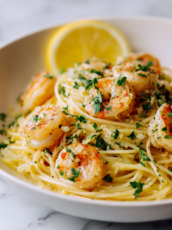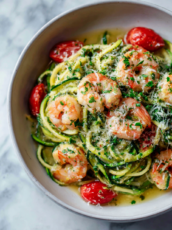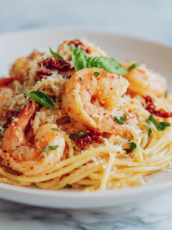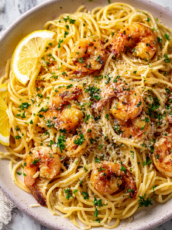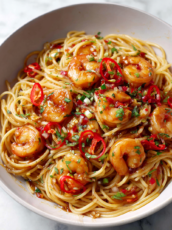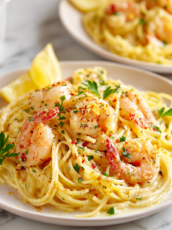
Shrimp piccata might sound fancy, but it’s actually one of those dishes that comes together fast and feels incredibly bright and fresh. The lemon juice and briny capers really lift simple shrimp into a whole new realm of flavor—like a quick trip to a seaside bistro without leaving your kitchen. I love how the tangy punch of lemon cuts through the richness of the butter and olive oil, giving each bite this lively zing that’s perfect for weeknights or whenever you need a little sunshine in your dinner.
What makes this recipe stand out for me is its simplicity and how it punches above its weight. It’s one of those dishes I keep coming back to because it’s honest, straightforward, and utterly satisfying. Plus, it’s a reminder that sometimes, a handful of pantry staples—lemon, capers, butter—are all you need to turn out something that feels special, even when you’re in a rush or don’t want to fuss too much.
Focusing on how the bright, tangy lemon and briny capers transform simple shrimp into a dish that feels like a quick escape to a sunny seaside cafe, even on busy weeknights.
Bright Flavors from a Quick Pantry
- This dish reminds me of seaside vacations, even when I’m stuck in the city, the lemon and capers bring that sunny feeling to life.
- I used to think quick dinners meant sacrificing flavor, but shrimp piccata proved me wrong—it’s bright, fresh, and ready in under 30 minutes.
- There’s a little chaos in my kitchen every time I make this—shrimp sizzling, lemon juice splattering—yet it always turns out perfect and satisfying.
- Sharing this recipe with friends always sparks stories of summer trips and carefree days by the water, no matter what season it is.
- Nothing beats the sense of pride I feel when I serve this and see everyone’s surprised faces at how simple ingredients can taste so vibrant.
The story behind this recipe
- This recipe was born out of a busy weeknight craving for something bright and simple but with a little elegance. I remember the first time I made it—standing at the stove, feeling the aroma of lemon and butter fill the kitchen, and thinking how these humble ingredients can turn into a dish that feels like a special treat. It’s one of those recipes that’s become a personal comfort, reminding me that quick doesn’t mean sacrificing flavor.
- The inspiration comes from my travels along the Italian coast, where I fell in love with the way seaside cafes serve up quick, citrusy seafood dishes that are both fresh and satisfying. I started experimenting with my own version, focusing on how the briny capers and bright lemon juice could elevate simple shrimp into something memorable. Now, it’s a go-to whenever I need a reliable, lively dinner that’s ready before I even notice the time passing.
- heading: ‘The story behind this recipe’
Historical and Cultural Roots
- Shrimp piccata is inspired by traditional Italian dishes that emphasize bright, citrusy flavors paired with briny capers.
- The dish likely originated in Sicily or southern Italy, where seafood and lemon are staples in coastal cuisine.
- Its simplicity and quick preparation made it a popular weeknight meal, especially in homes with limited time but high flavor expectations.
Key Ingredients and Tips
- Shrimp: I prefer deveined, tail-on shrimp for ease and presentation; their firm, juicy bite is key—ensure they turn pink and opaque. Swap for scallops if you want a richer feel.
- Lemon juice: Freshly squeezed brightens everything—squeeze just before adding to keep that zesty punch sharp and vibrant. Bottled lemon works in a pinch but loses some zing.
- Capers: Those little briny bursts add depth—rinsing them cuts excess salt, but keep some for that unmistakable tang. Try green or black capers based on your salt preference.
- Butter: I use unsalted, for control—melts into the sauce, creating a silky, rich base. Swap for olive oil if you want a lighter, less creamy feel, but lose some that luscious mouthfeel.
- Olive oil: Good extra virgin olive oil adds a fruity aroma—heat gently to avoid bitterness. Skip it if you’re out, but the flavor will be less rounded.
- White wine: A splash of dry white wine lifts the sauce—look for something crisp and not too sweet. If you skip, add a touch more lemon for brightness.
- Garlic: Minced fresh garlic, just enough—avoid burning it, as it turns bitter. Use garlic powder in a pinch but can’t beat the real deal for aroma and punch.
Spotlight on key ingredients
Lemon juice:
- Shrimp: I prefer deveined, tail-on shrimp for ease and presentation; their firm, juicy bite is key—ensure they turn pink and opaque. Swap for scallops if you want a richer feel.
- Freshly squeezed brightens everything—squeeze just before adding to keep that zesty punch sharp and vibrant. Bottled lemon works in a pinch but loses some zing.
- Capers: Those little briny bursts add depth—rinsing them cuts excess salt, but keep some for that unmistakable tang. Try green or black capers based on your salt preference.
Capers:
- Shrimp: Their quick-cooking nature means they turn from translucent to pink and opaque in just a couple of minutes—watch for that color change and firm texture.
- During cooking, they puff slightly and release a briny aroma—adding a salty, tangy punch that cuts through richness, especially when heated just right.
Notes for ingredient swaps
- Fresh Shrimp: I prefer deveined, tail-on shrimp for ease and presentation; their firm, juicy bite is key—ensure they turn pink and opaque. Swap for scallops if you want a richer feel.
- Lemon juice: Freshly squeezed brightens everything—squeeze just before adding to keep that zesty punch sharp and vibrant. Bottled lemon works in a pinch but loses some zing.
- Capers: Those little briny bursts add depth—rinsing them cuts excess salt, but keep some for that unmistakable tang. Try green or black capers based on your salt preference.
- Butter: I use unsalted, for control—melts into the sauce, creating a silky, rich base. Swap for olive oil if you want a lighter, less creamy feel, but lose some that luscious mouthfeel.
- Olive oil: Good extra virgin olive oil adds a fruity aroma—heat gently to avoid bitterness. Skip it if you’re out, but the flavor will be less rounded.
- White wine: A splash of dry white wine lifts the sauce—look for something crisp and not too sweet. If you skip, add a touch more lemon for brightness.
- Garlic: Minced fresh garlic, just enough—avoid burning it, as it turns bitter. Use garlic powder in a pinch but can’t beat the real deal for aroma and punch.
Equipment & Tools
- Large skillet: To sear the shrimp evenly and cook the sauce.
- Tongs: To flip and handle the shrimp without breaking them.
- Sharp knife: For mincing garlic and preparing ingredients.
- Small bowl: For dredging flour and holding prepped ingredients.
- Lemon squeezer or reamer: To extract fresh lemon juice efficiently.
Step-by-step guide to shrimp piccata
- Equipment & Tools: Use a large skillet (about 10-inch diameter) for even heat and space. Have tongs, a sharp knife, a small bowl for flour, and a squeeze bottle or jug for lemon juice ready.
- Prep the shrimp: Pat them dry with paper towels. Season lightly with salt and pepper, then dredge in a little flour, shaking off excess. This helps create a light crust and thickens the sauce slightly.
- Heat the pan: Place over medium-high heat, about 180°C (350°F). Add 2 tbsp olive oil and 1 tbsp butter. When the butter melts and the oil shimmers, you’re ready.
- Sear the shrimp: Lay them in the hot pan in a single layer. Cook for 2 minutes without moving, then flip. When they turn pink and are just opaque, about 1-2 minutes more, remove and set aside. If they stick, wait a bit longer before flipping.
- Make the sauce: Lower heat to medium. Add minced garlic (about 1 tsp) to the same pan. Sauté until fragrant, about 30 seconds—don’t let it brown or turn bitter.
- Deglaze: Pour in 1/4 cup dry white wine, scraping up any browned bits from the bottom. Let it simmer for 2-3 minutes until slightly reduced and fragrant.
- Add lemon: Squeeze in 2 tbsp fresh lemon juice. Stir in 1 tbsp capers (rinsed). Cook for 1 minute to meld flavors—look for a vibrant, slightly foamy sauce.
- Finish the sauce: Return shrimp to the pan. Toss gently to coat in the sauce. Cook for another 1-2 minutes, until shrimp are heated through and sauce is slightly thickened. If sauce is too thin, let it simmer for a bit longer until it coats the shrimp nicely.
- Rest & plate: Remove from heat. Let sit for 1 minute. Plate the shrimp with sauce spooned over. Garnish with chopped parsley or lemon wedges if desired.
- Check doneness: Shrimp should be opaque, pink, and firm but tender. The sauce should be glossy and fragrant. The edges of the shrimp should have a slight golden hue, and the sauce should cling slightly to the shrimp.
Let the dish rest for a minute off heat to settle. Serve immediately with a sprinkle of fresh herbs or lemon wedges for extra brightness.
How to Know It’s Done
- Shrimp are pink, opaque, and firm to the touch.
- Sauce is glossy, lemon-bright, and slightly thickened.
- Shrimp are cooked through without overcooking or toughness.
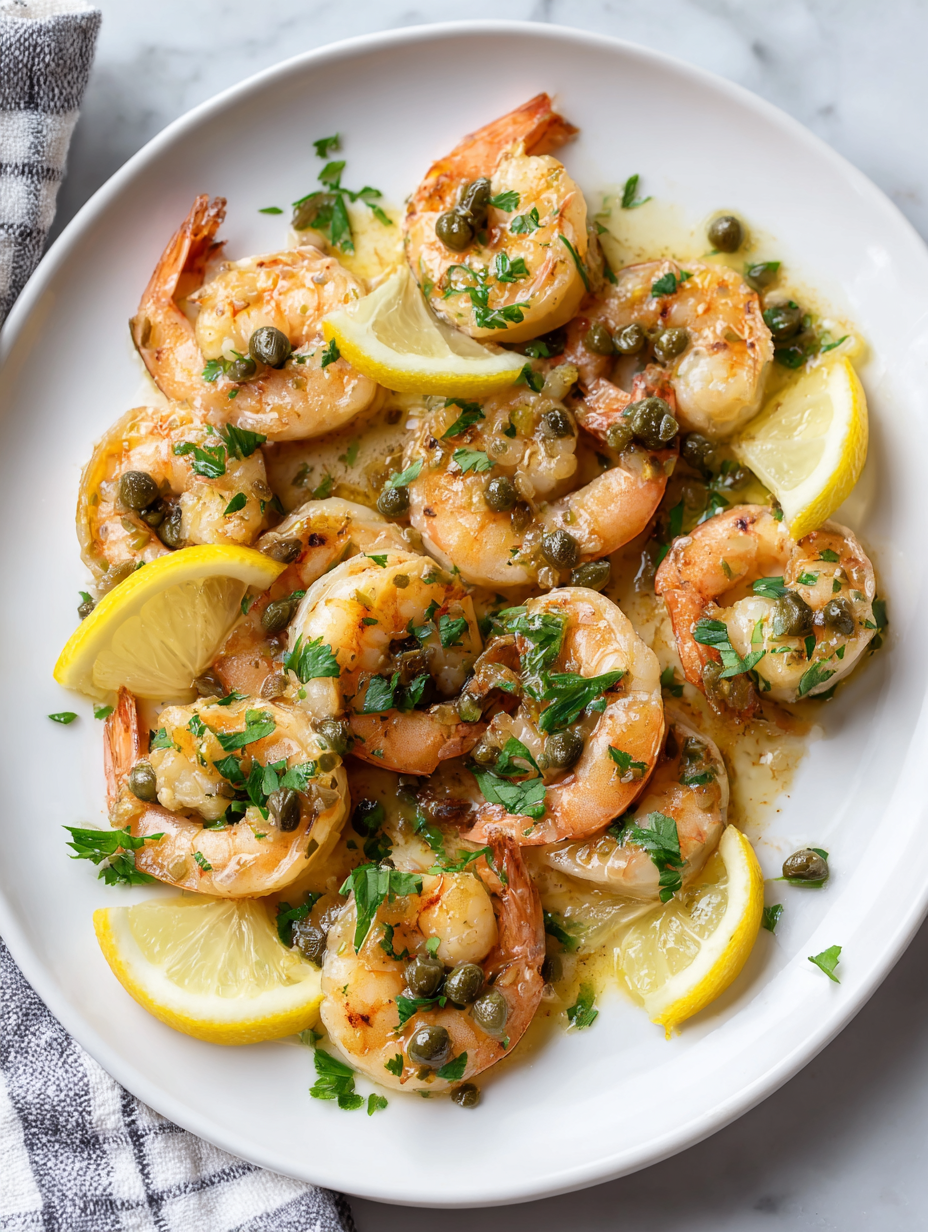
Shrimp Piccata
Ingredients
Equipment
Method
- Pat the shrimp dry with paper towels, then season lightly with salt and pepper. Dredge the shrimp in a little flour if desired, shaking off excess, to help create a light crust.
- Heat a large skillet over medium-high heat and add olive oil. Once shimmering, add the shrimp in a single layer. Sear without moving for about 2 minutes until the bottoms are golden and the shrimp start to turn pink.
- Flip the shrimp using tongs and cook for another 1-2 minutes until they are fully pink, opaque, and just cooked through. Remove the shrimp from the pan and set aside.
- Lower the heat to medium. Add the minced garlic to the same pan and sauté until fragrant, about 30 seconds. Be careful not to let it brown or burn.
- Pour in the white wine to deglaze the pan, scraping up any browned bits from the bottom with a wooden spoon. Let it simmer for 2-3 minutes until slightly reduced and fragrant.
- Squeeze in fresh lemon juice and stir in rinsed capers. Cook for another minute, allowing the flavors to meld and the sauce to become glossy and bright.
- Return the cooked shrimp to the pan, tossing gently to coat in the sauce. Cook for another 1-2 minutes until the shrimp are heated through and the sauce has thickened slightly.
- Remove from heat and let sit for a minute. Serve immediately, spooning the bright, glossy sauce over the shrimp. Garnish with fresh herbs or lemon wedges if desired.
Tips and tricks for perfect shrimp piccata
- Use high heat early → Ensures shrimp sear quickly, locking in juices and creating a slight golden crust.
- Dredge in flour lightly → Prevents sticking and helps thicken the sauce, but don’t overdo it to avoid a gummy coating.
- Squeeze lemon at the right moment → Brightens the sauce without overpowering, add just before serving for maximum zing.
- Deglaze with wine thoroughly → Scrape up browned bits for deeper flavor, simmer until reduced by half for concentrated richness.
- Rest the shrimp briefly → Keeps them tender and juicy, don’t serve immediately after cooking to avoid rubberiness.
- Taste and adjust acidity → Add more lemon or capers at the end if needed, balancing the tang and briny punch.
- Use fresh garlic carefully → Sauté until fragrant, avoid browning to prevent bitterness, which can ruin the sauce’s brightness.
Common mistakes and how to fix them
- FORGOT to dry shrimp before flouring → They stick if wet, pat dry for crispness.
- DUMPED in lemon juice too early → Add at the right moment for bright flavor without overcooking.
- OVER-TORCHED garlic → Sauté gently until fragrant, avoid browning to prevent bitterness.
- SKIPPED rinsing capers → Rinse to reduce excess salt but keep briny flavor intact.
Quick fixes and pantry swaps
- When sauce shimmers, add a splash of water to loosen and shimmer again.
- Splash in extra lemon juice for brightness if sauce feels dull or flat.
- Patch over a burnt garlic pan with fresh garlic and butter for a new flavor layer.
- Shield the pan with a lid if shrimp start to curl too tightly, preventing overcooking.
- Rescue over-salted sauce by stirring in a small dollop of cream or a pat of butter, then simmer.
Prep, store, and reheat tips
- Prepare the shrimp: Peel and devein ahead of time, then keep in an airtight container in the fridge for up to 24 hours. Pat dry before cooking to avoid excess moisture and splattering.
- Make the sauce components: Juice lemons and measure capers and garlic in advance. Keep lemon juice refrigerated in a sealed jar for up to 2 days, and rinse capers just before use for maximum brininess.
- Storage: Leftover shrimp piccata can be refrigerated in an airtight container for up to 2 days. The sauce may thicken slightly; gently reheat with a splash of water or broth to loosen it.
- Reheating: Warm gently over low heat on the stove, stirring frequently. The shrimp can become rubbery if overcooked, so reheat just until warm and sauce is shimmering. Avoid microwave if possible to prevent uneven reheating and rubberiness.
- Sensory notes: The flavors mellow slightly after sitting, with lemon brightness softening and capers melding into the sauce. The shrimp may lose some firmness, so reheat carefully to preserve texture.
Top questions about shrimp piccata
1. Can I use bottled lemon juice?
Use fresh lemon juice for the brightest flavor and avoid bottled, which can be dull and less vibrant.
2. Can I substitute bottled lemon juice?
Yes, but squeeze fresh lemon just before adding to preserve the zesty, bright flavor that really lifts the dish.
3. How do I know when shrimp are done?
Overcooked shrimp turn rubbery and lose their juicy bite; cook just until pink and opaque, about 3 minutes total.
4. What’s the best way to sear shrimp without overcooking?
Use high heat initially to sear the shrimp quickly, locking in juices and creating a light golden crust.
5. Should I rinse the capers?
Rinse capers briefly under cold water to reduce excess salt but keep enough for that signature briny burst.
6. How do I thicken the sauce if it’s too runny?
If sauce becomes too thin, simmer a bit longer until it coats the shrimp with a glossy, flavorful layer.
7. What kind of pan works best for shrimp piccata?
Use a non-stick or well-seasoned skillet for easier flipping and to prevent sticking or tearing of the shrimp.
8. When should I serve the dish?
Serve immediately after cooking to enjoy the bright, lively flavors at their peak—sauce should shimmer and coat the shrimp.
9. How do I reheat leftovers without overcooking?
Reheat gently over low heat, stirring frequently, to avoid overcooking the shrimp and losing their tender texture.
10. Can I substitute garlic powder for fresh garlic?
Use freshly minced garlic for the best aroma; if out, garlic powder can work but won’t deliver the same pungent punch.
This shrimp piccata isn’t just about quick cooking; it’s about capturing a burst of sunshine in every bite. The bright lemon, briny capers, and tender shrimp come together in a way that feels both effortless and special, even on the busiest nights.
Whenever I make this, I’m reminded that simple ingredients, treated well, can turn ordinary into memorable. It’s a dish that invites casual sharing, sparks happy memories, and always leaves me satisfied—no fuss needed.

Welcome to Owning This Stove. I’m so glad you’re here. I’m a food blogger, recipe developer, and storyteller who believes food is one of the most honest ways to understand a place, a person, or a moment in time. This blog is where I collect those moments, from quiet mornings in unfamiliar kitchens to crowded cafés filled with conversation and clinking cups.