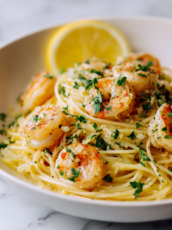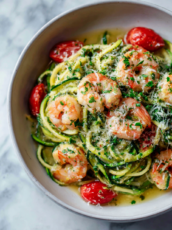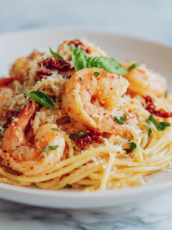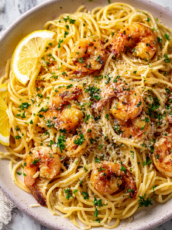
This shrimp coconut curry is like capturing a breezy morning at the seaside market, where the air is thick with salt and fresh seafood. I love how simple ingredients come together here, brightened by a splash of lime and the gentle sweetness of coconut milk, reminding me of summer mornings on the coast.
It’s not just a quick dinner, but a way to bring that oceanic freshness into your kitchen, especially when you’re craving something vibrant and comforting. The flavors are straightforward, but layered—think sweet shrimp, creamy coconut, and a hint of spicy heat—like a little coastal escape in every bite.
I always keep this dish in my back pocket when I want something honest and uncomplicated, yet packed with the kind of brightness that makes you close your eyes and breathe deep. It’s a reminder that sometimes, the simplest ingredients, treated kindly, create the most memorable meals.
Focusing on how this dish brings back a seaside market vibe, blending fresh, raw ingredients with simple techniques that highlight their natural brightness and oceanic freshness.
A Coastal Flavors Reminder
- Making this dish always takes me back to lazy summer afternoons by the coast, smelling salt air and roasted seafood.
- I get a little proud whenever I pull off that perfect balance of spicy heat and creamy coconut—feels like a small victory.
- There’s a chaotic joy in chopping fresh ingredients while the curry simmers, filling the kitchen with warm, tropical scents.
- Honestly, this recipe has become my go-to when I want comfort that doesn’t feel heavy, just bright and satisfying.
- I love how a simple squeeze of lime at the end transforms all those layered flavors into something truly lively.
The story behind this recipe
This shrimp coconut curry is born from a memory of a spontaneous trip to a tiny coastal village. I was struck by how a simple, rustic dish could carry so much flavor and comfort, pulling together fresh seafood and tropical warmth in one pot. It’s a reminder that sometimes, the best meals are made with just a handful of honest ingredients, cooked with a little patience and a lot of love.
Historical and Cultural Notes
- This curry’s roots trace back to coastal Southeast Asian markets, blending fresh seafood with tropical spices.
- Historically, coconut milk was a vital resource for coastal communities, used to enrich stews and curries alike.
- Shrimp and coconut pairings like this are common in regions where land meets ocean, embodying a simple, hearty tradition.
- The dish’s vibrant flavors reflect centuries of trade routes bringing together ingredients from across Asia and the Pacific.
Ingredients at a Glance
- Shrimp: I prefer peeled, deveined shrimp for quick cooking and clean bites. You might want to try smaller ones for more surface caramelization.
- Coconut Milk: I look for full-fat canned coconut milk—rich and creamy, with a slightly sweet aroma that awakens the senses. Light versions thin out the sauce and lose that lush texture.
- Red Curry Paste: This is the flavor backbone—pungent, spicy, with a hint of lemongrass. Use a good quality one, but if you want milder heat, start with less and adjust.
- Lime Juice: Brightens everything with a citrus punch—feel free to add a little more at the end if it needs a wake-up call. The zest can add a lovely floral note if you have it.
- Vegetables (like bell peppers or spinach): I toss in greens or peppers for color and crunch. If you want more body, try adding diced sweet potato or carrots for some sweetness and substance.
- Oil (like coconut or vegetable oil): I lean toward coconut oil for a subtle tropical aroma, but any neutral oil will do. Just make sure it’s hot enough to sizzle the garlic and curry paste without burning.
- Fresh Herbs (cilantro, basil): These are sprinkled on hot, releasing a fresh, herbal aroma. If you don’t have cilantro, mint works surprisingly well for a different twist.
Spotlight on key ingredients
Shrimp and Coconut Milk:
- Shrimp: I prefer peeled, deveined shrimp for quick cooking and clean bites. You might want to try smaller ones for more surface caramelization.
- Coconut Milk: I look for full-fat canned coconut milk—rich and creamy, with a slightly sweet aroma that awakens the senses. Light versions thin out the sauce and lose that lush texture.
Notes for ingredient swaps
- Fresh Shrimp: I prefer peeled, deveined shrimp for quick cooking and clean bites. You might want to try smaller ones for more surface caramelization.
- Coconut Milk: I look for full-fat canned coconut milk—rich and creamy, with a slightly sweet aroma that awakens the senses. Light versions thin out the sauce and lose that lush texture.
- Red Curry Paste: This is the flavor backbone—pungent, spicy, with a hint of lemongrass. Use a good quality one, but if you want milder heat, start with less and adjust.
- Lime Juice: Brightens everything with a citrus punch—feel free to add a little more at the end if it needs a wake-up call. The zest can add a lovely floral note if you have it.
- Vegetables (like bell peppers or spinach): I toss in greens or peppers for color and crunch. If you want more body, try adding diced sweet potato or carrots for some sweetness and substance.
- Oil (like coconut or vegetable oil): I lean toward coconut oil for a subtle tropical aroma, but any neutral oil will do. Just make sure it’s hot enough to sizzle the garlic and curry paste without burning.
- Fresh Herbs (cilantro, basil): These are sprinkled on hot, releasing a fresh, herbal aroma. If you don’t have cilantro, mint works surprisingly well for a different twist.
Equipment & Tools
- Large pan or wok: For cooking the curry evenly and with enough space to stir.
- Spatula: To stir ingredients and prevent sticking or burning.
- Knife and cutting board: To prep shrimp and vegetables efficiently.
- Measuring spoons and cups: To ensure accurate seasoning and ingredient proportions.
- Can opener: To open the coconut milk without fuss.
Step-by-step guide to shrimp coconut curry
- Gather your equipment: a large shallow pan or wok, a spatula, a knife, and a cutting board. You’ll also need measuring spoons and cups, and a can opener for the coconut milk.
- Prep the ingredients: peel and devein the shrimp, roughly chop your vegetables (bell peppers or spinach), and measure out your curry paste, coconut milk, lime juice, and herbs.
- Heat the pan over medium heat (about 160°C/320°F). Add a tablespoon of coconut or vegetable oil, letting it shimmer but not smoke.
- Add the curry paste: cook for 30 seconds to 1 minute until fragrant, stirring constantly. It should turn a little darker and release spicy, lemongrass aroma.
- Toss in the vegetables: stir and cook for 2-3 minutes until they soften slightly but still retain some crunch, smelling fresh and vibrant.
- Pour in the coconut milk: stir well, bring to a gentle simmer, and cook for 5 minutes. The sauce should thicken slightly and smell rich and aromatic.
- Add the shrimp: lay them in the sauce, cook for 3-4 minutes until they turn pink and opaque. Keep an eye out for a slight jiggle and a firm texture.
- Taste and adjust: squeeze in lime juice, add salt or fish sauce if needed. If the sauce is too thick, add a splash of water or broth. If too thin, simmer a little longer.
- Remove from heat: let the curry rest for 2 minutes to meld flavors. The shrimp should be tender, and the sauce vibrant and fragrant.
- Finish and plate: sprinkle with chopped herbs like cilantro or basil. Serve hot over jasmine rice or your favorite grain, garnished with a lime wedge.
Let the curry sit for a couple of minutes off heat to deepen the flavors. Garnish generously with fresh herbs, squeeze over extra lime if desired, and serve immediately over rice or grains.
How to Know It’s Done
- Shrimp are opaque and firm, with a slight jiggle.
- Sauce is thickened slightly and has a fragrant coconut-spice aroma.
- Vegetables are tender yet retain some crunch, with bright color and aroma.
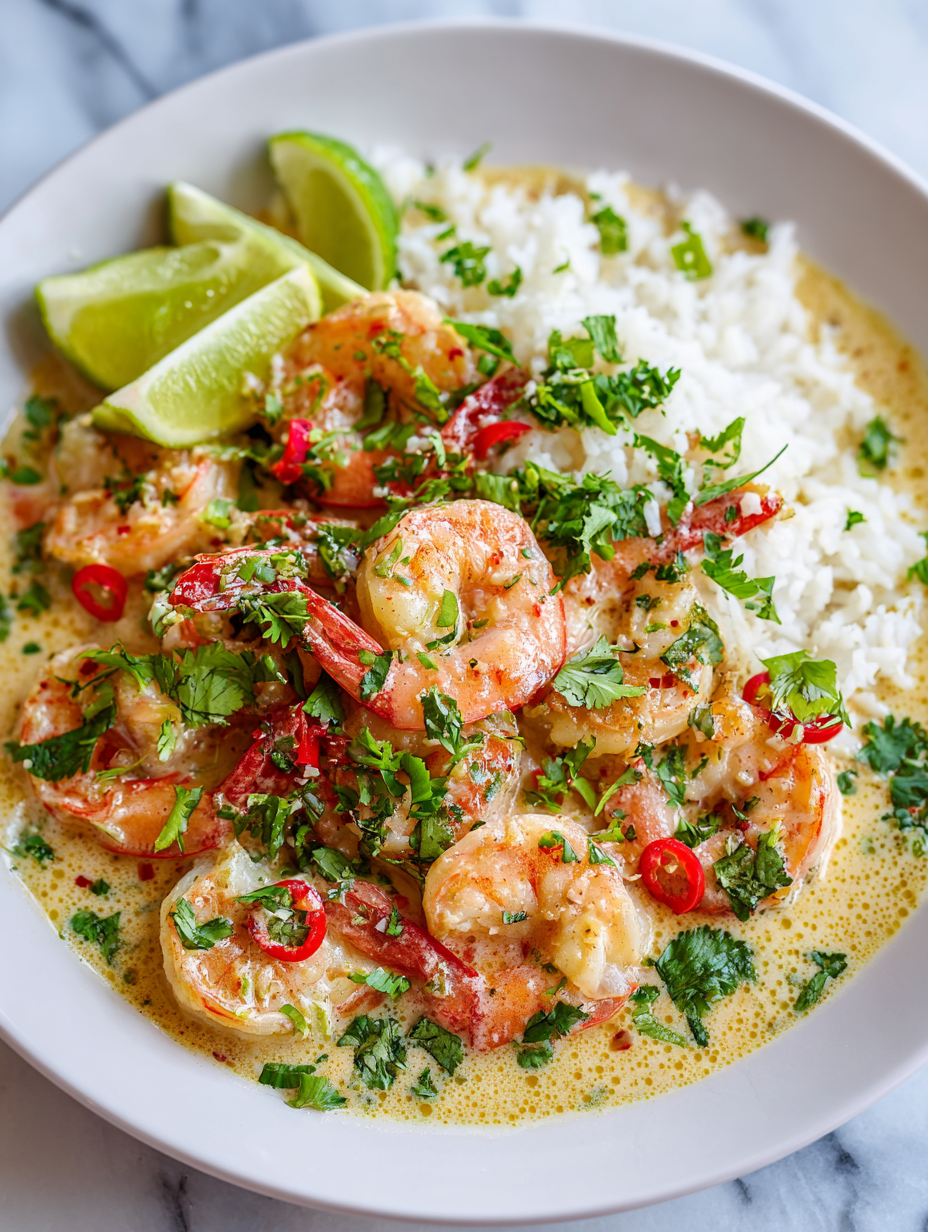
Shrimp Coconut Curry
Ingredients
Equipment
Method
- Gather all your ingredients and prep the shrimp by peeling and deveining them if needed. Slice the bell pepper into thin strips and mince the garlic.
- Heat a large pan or wok over medium heat and add a tablespoon of oil. Once shimmering, add the minced garlic and cook for about 30 seconds until fragrant and slightly golden.
- Stir in the red curry paste and cook for another minute, stirring constantly, until the paste turns darker and releases a spicy, lemongrass aroma.
- Add the sliced bell peppers to the pan and sauté for 2-3 minutes until they soften slightly but still retain some crunch, and the mixture smells vibrant and fresh.
- Pour in the coconut milk, stirring to combine everything well. Bring the mixture to a gentle simmer and cook for about 5 minutes until the sauce thickens slightly and becomes fragrant.
- Add the shrimp to the simmering sauce, laying them in a single layer. Cook for 3-4 minutes until they turn pink, opaque, and slightly firm to the touch.
- Squeeze fresh lime juice into the curry and stir. Taste and adjust seasoning with salt or fish sauce if needed. If the sauce is too thick, add a splash of water and stir to loosen it.
- Remove the pan from heat and sprinkle with chopped fresh herbs. Serve the curry hot over rice or grains, garnished with extra herbs and lime wedges if desired.
Notes
Tips for Perfect Shrimp Coconut Curry
- Use fresh shrimp for a sweet, briny flavor that really shines in the curry.
- Toast your curry paste briefly in oil to deepen its aroma and enhance its spicy profile.
- Add coconut milk gradually, stirring well, to create a silky, uniform sauce without separation.
- Sear shrimp over high heat until just pink and slightly charred for extra flavor and texture.
- Finish with a squeeze of lime at the end to brighten the rich coconut and spice notes.
- Keep the heat moderate when simmering to prevent burning the coconut milk and losing creaminess.
- Garnish generously with fresh herbs right before serving for a burst of herbal freshness and aroma.
Common mistakes and how to fix them
- FORGOT to adjust heat: If curry burns, lower heat and add a splash of water.
- DUMPED too much coconut milk: Use less for a thicker sauce, or simmer longer.
- OVER-TORCHED the shrimp: Remove early if shrimp turn pink and firm quickly.
- MISSED the lime at the end: Brighten flavors with a squeeze just before serving.
Quick fixes and pantry swaps
- When sauce is too thick, splash in hot water and stir until smooth.
- If shrimp overcooks, immediately remove from heat to keep tenderness.
- Splash coconut milk if curry smells burnt or too intense.
- Patch dull flavor with an extra squeeze of lime or a pinch of salt.
- Shield curry from scorching by lowering heat when simmering, especially with coconut milk.
Prep, store, and reheat tips
- Prep the shrimp by peeling and deveining up to a day ahead; keep covered in the fridge for freshness. The scent should stay briny and clean.
- You can make the curry sauce up to 2 days in advance; store it in an airtight container in the fridge. It will thicken slightly and develop a richer coconut aroma.
- Reheat gently over low heat, stirring often. Expect the sauce to shimmer and smell fragrant; add a splash of water if it thickens too much.
- Leftovers will keep for up to 3 days in the fridge. The flavors deepen and the sauce gains a cozy, concentrated coconut scent, but shrimp texture may soften.
- For freezing, store in a freezer-safe container for no more than 1 month. Defrost overnight in the fridge, then reheat slowly for best sensory results—shrimp should stay tender and the sauce fragrant.
Top questions about shrimp coconut curry
1. Can I use frozen shrimp?
Use peeled, deveined shrimp for quick cooking and easy eating, which keeps the dish neat and tender.
2. Can I substitute light coconut milk?
Full-fat coconut milk gives a rich, creamy texture and a slightly sweet aroma that balances spice.
3. Is there a milder curry paste option?
Red curry paste adds depth and spice; start with less if you prefer milder heat, and adjust to taste.
4. How much lime should I add?
A squeeze of lime brightens the dish, adding a citrusy punch that cuts through the richness.
5. Can I add other vegetables?
Bell peppers or spinach add color and crunch; diced sweet potato or carrots bring sweetness and heartiness.
6. What oil is best for cooking this curry?
Coconut oil enhances tropical aroma, but any neutral oil will work if you don’t have it.
7. Can I skip the herbs?
Fresh herbs like cilantro or basil add a fragrant, herbal finish; mint can be a good alternative.
8. How do I know when shrimp are done?
Cook the shrimp until just pink and opaque, about 3-4 minutes, for tender, juicy bites.
9. How long should I simmer the sauce?
Simmer the sauce until it thickens slightly and smells fragrant—about 5 minutes—before adding shrimp.
10. How do I reheat the curry?
Store leftovers in an airtight container for up to 3 days; reheat gently until steaming and fragrant.
This dish isn’t just about the ingredients; it’s about the memory of seaside mornings and the simple joy of pulling together something honest and warming. It’s a reminder that the best meals come from a little chaos, a pinch of patience, and a lot of honest flavors.
Whenever I cook this curry, I feel that coastal breeze, the salt air, and the gentle sweetness of coconut—no matter where I am. It’s a dish that grounds me, reconnects me with fresh ingredients, and makes a little kitchen feel like a quiet corner of the ocean.

Welcome to Owning This Stove. I’m so glad you’re here. I’m a food blogger, recipe developer, and storyteller who believes food is one of the most honest ways to understand a place, a person, or a moment in time. This blog is where I collect those moments, from quiet mornings in unfamiliar kitchens to crowded cafés filled with conversation and clinking cups.