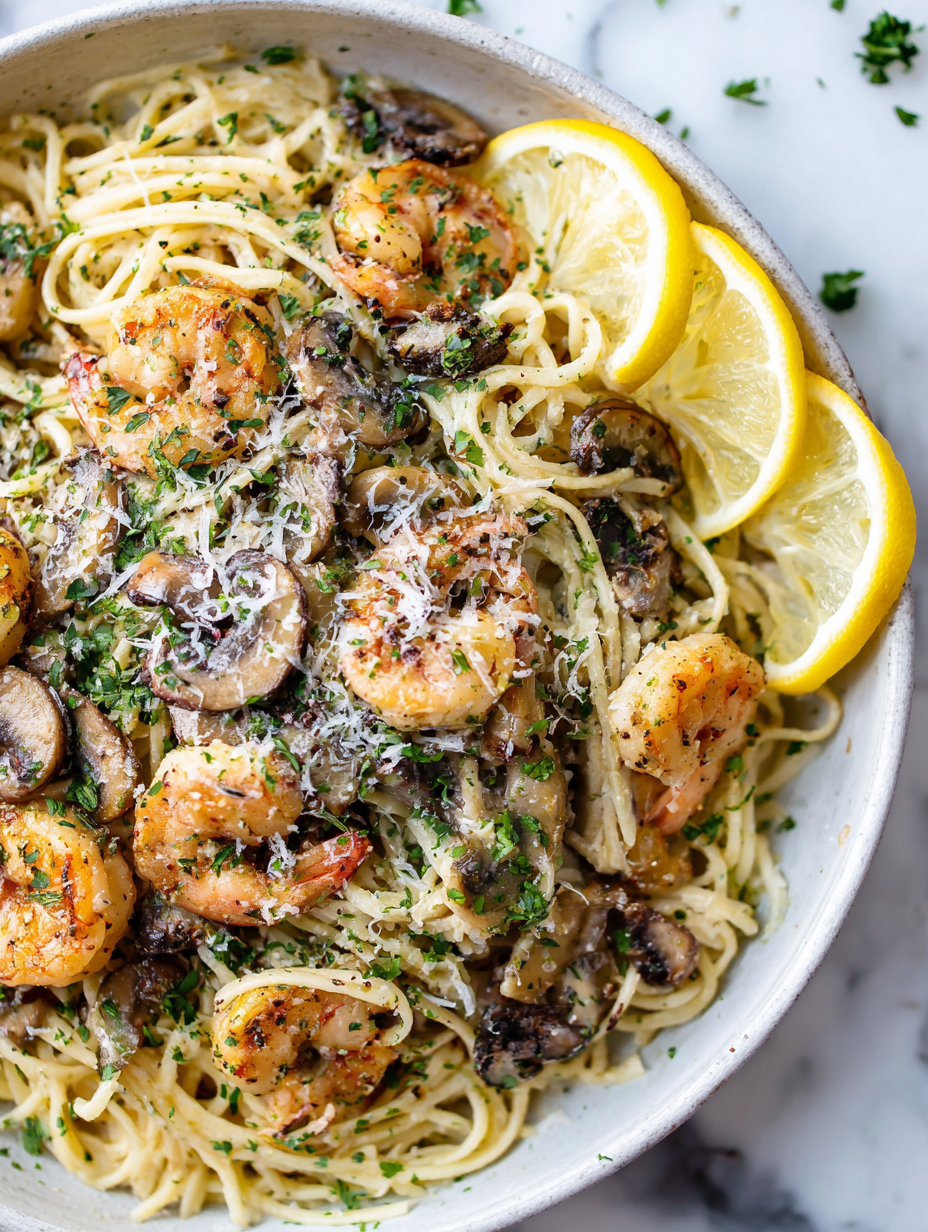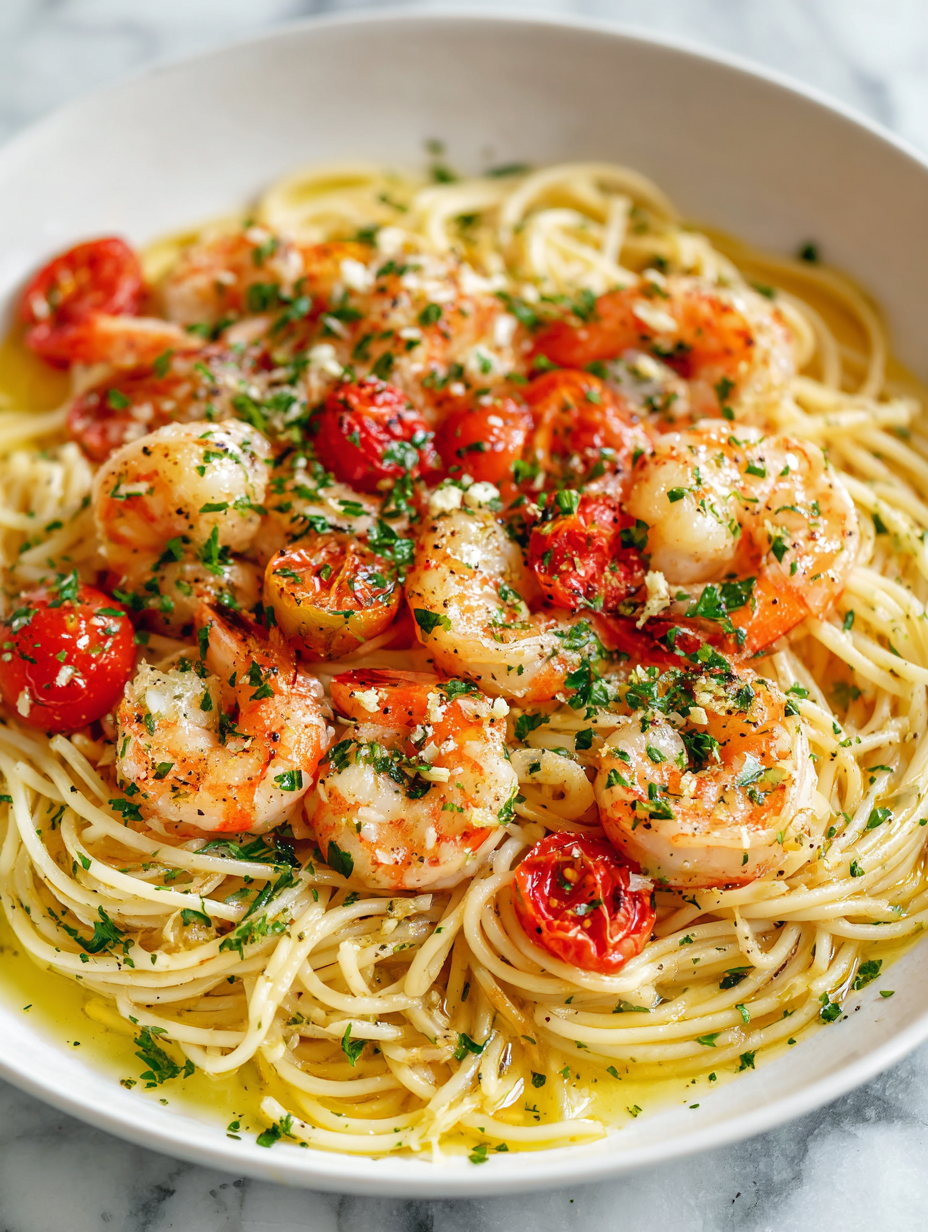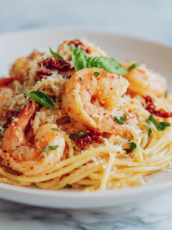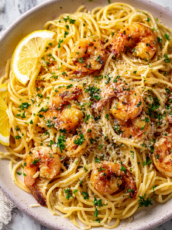
There’s something about a creamy shrimp pasta that feels like a small, indulgent secret—simple ingredients, but when combined right, it transforms into something cozy and satisfying. I’ve always loved how the white sauce adds a silky richness that makes every bite feel special, even on a busy weeknight. It’s the kind of dish that’s quick enough to whip up, but rich enough to make you pause and savor.
This recipe grew out of those nights when I needed comfort fast, but didn’t want to settle for takeout. The smell of garlic sizzling, the briny snap of shrimp, and that velvety white sauce—these are the small joys that turn a simple dinner into a moment of pause. It’s about balancing simplicity with a touch of elegance, making everyday dinners feel like a treat.
This recipe is inspired by my late-night craving for comfort food that’s quick, creamy, and feels indulgent without the heaviness. It’s about transforming simple ingredients—shrimp, pasta, and a few pantry staples—into a dish that feels like a warm hug after a long day. I love how the creamy white sauce brings out the sweet, briny punch of the shrimp, making every bite satisfyingly rich yet balanced.
Unexpected comfort in creamy shrimp
- There’s a quiet joy in perfecting a simple sauce that coats every strand of pasta just right.
- Nothing beats that rush of pride when the shrimp turn pink and juicy, signaling it’s all coming together.
- I love how this dish feels like a little celebration—luxurious, yet so accessible, it’s comfort food with a twist.
- A busy weeknight turns into a small victory when I realize I’ve got everything I need for this creamy, briny pasta.
- It’s that moment of relief when the sauce thickens perfectly and clings to the pasta, making each bite a little richer.
The story behind this recipe
- This dish harks back to a night when I was craving something creamy and satisfying but didn’t want the usual heaviness. I started experimenting with white sauces that could hold their own with shrimp, and somehow, this simple combo became my go-to comfort. It’s funny how a little bit of garlic, butter, and patience can turn pantry staples into something special.
- I remember the first time I nailed that silky sauce—pouring it over hot pasta and watching the shrimp turn pink, smelling that rich, garlicky aroma fill the kitchen. It felt like a small victory, like I’d rediscovered a secret recipe I could rely on after long days. Now, it’s become my fallback for easy dinners that still feel indulgent.
- heading: ‘The inspiration behind this dish’
Historical & Cultural Tidbits
- This dish traces back to coastal Mediterranean cuisines where quick, creamy seafood pastas became a staple for fishermen returning home after long days at sea.
- The use of white sauce in pasta recipes gained popularity in Italy during the 20th century as a rich, quick alternative to tomato-based sauces, especially in regions closer to dairy farms.
- Shrimp white sauce pasta in particular became a comfort food in American households during the mid-1900s, influenced by both Italian immigrants and local adaptations of creamy seafood dishes.
- The combination of shrimp and white sauce reflects a culinary fusion—rich, briny, and satisfying—a favorite for those seeking a hearty, yet elegant meal.
Key Ingredient Insights
- Shrimp: I love using fresh, deveined shrimp—they turn pink and release a sweet aroma when cooked. You can swap with scallops for a different seafood punch.
- White sauce: It’s made from butter, garlic, and milk—rich, velvety, with a bright garlic aroma. For a lighter version, try using half-and-half or even cashew cream.
- Pasta: I prefer al dente, the slight chew gives the dish life. Whole wheat works well if you want a nutty note, but regular pasta keeps it classic.
- Garlic: It’s the backbone of this sauce—sizzle until fragrant, just golden. Skip if you’re sensitive, or add extra if you love that punch of aroma.
- Lemon juice: Brightens everything—adds a zing that cuts through the richness. Use a fresh lemon for that zesty, citrusy punch.
- Parmesan: I grate it fresh for the best flavor, adding umami and saltiness. Pecorino works as a sharper alternative if you prefer a tangier note.
- Olive oil: For sautéing, I go for a good extra virgin—fruity and robust. A drizzle at the end adds a glossy finish and depth.
Spotlight on key ingredients
Shrimp and White Sauce:
- Shrimp: I love using fresh, deveined shrimp—they turn pink and release a sweet aroma when cooked. You can swap with scallops for a different seafood punch.
- White sauce: It’s made from butter, garlic, and milk—rich, velvety, with a bright garlic aroma. For a lighter version, try using half-and-half or even cashew cream.
Notes for ingredient swaps
- Dairy-Free: Swap milk with coconut milk or cashew cream—adds richness, but expect a slightly different flavor profile.
- Gluten-Free: Use rice or corn pasta instead of wheat—still hearty, but with a different texture and bite.
- Seafood Alternative: Replace shrimp with scallops or firm white fish—maintains the seafood essence, just milder in flavor.
- Vegan Version: Omit shrimp, add sautéed mushrooms or tofu—still satisfying, with umami depth from nutritional yeast or miso.
- Lemon Substitute: Use lime juice for a more tart, tropical brightness—keeps the zesty punch alive.
- Cheese Swap: Pecorino or Gruyère can replace Parmesan—offers a different salty, nutty note, slightly sharper or richer.
- Oil Choice: Use avocado oil or light olive oil—still good for sautéing, with subtle flavor differences.
Equipment & Tools
- Large sauté pan: Cook the sauce and shrimp, toss everything together
- Knife: Prep shrimp and garlic
- Cutting board: Provide a stable surface for chopping
- Measuring cup: Accurately measure milk and liquids
- Whisk: Prevent lumps and create a smooth sauce
Step-by-step guide to creamy shrimp pasta
- Equipment & Tools: Get a large sauté pan (about 30cm/12in), a sharp knife, a cutting board, a measuring cup, and a whisk. The pan needs to be big enough to hold pasta and sauce comfortably and have a good non-stick surface.
- Cook pasta. Fill a large pot with salted water—about 1 tablespoon of salt per liter. Bring to a boil (around 100°C/212°F). Add 200g (7 oz) of spaghetti or linguine. Cook until just al dente, about 8 minutes. Drain and set aside.
- Prepare shrimp. While pasta cooks, peel and devein 300g (10.5 oz) of shrimp. Pat dry. Season lightly with salt and pepper. Have everything ready nearby—shrimp cook fast.
- Make white sauce. In the sauté pan, melt 2 tablespoons of butter over medium heat (about 160°C/320°F). Add 2 minced garlic cloves, sauté until fragrant—about 30 seconds. Do not let it brown or smell burnt.
- Add milk. Pour in 1 cup (240ml) of whole milk or half-and-half. Whisk constantly to prevent lumps. Bring to a gentle simmer—small bubbles around the edges—about 3 minutes. The sauce should thicken slightly.
- Cook shrimp. Push the sauce to one side of the pan. In the cleared space, add the shrimp in a single layer. Cook for about 2-3 minutes per side, until they turn pink and opaque. Flip once; they should develop a slight golden edge.
- Combine pasta and sauce. Toss cooked pasta into the pan with shrimp and sauce. Stir well to coat evenly. If the sauce is too thick, add a splash of reserved pasta water to loosen it—about 1-2 tablespoons.
- Finish with flavor. Add 1 tablespoon of lemon juice and ¼ cup of grated Parmesan cheese. Stir until melted and fragrant. Adjust seasoning with salt and pepper if needed.
- Resting & Finishing: Serve immediately, garnished with extra Parmesan or fresh herbs if you like. Let the pasta sit for a minute—this helps the flavors meld and the sauce to cling better.
- Checkpoints & How to Know It’s Done: The shrimp should be firm and opaque, not rubbery. The sauce should coat the pasta smoothly without being runny. The pasta should be al dente, with a slight bite.
Serve immediately, garnished with extra Parmesan or fresh herbs. Let sit 1 minute to meld flavors. Toss gently before plating to ensure even coating.
How to Know It’s Done
- Shrimp is pink and firm, not translucent or rubbery.
- Sauce is silky and coats the pasta without pooling.
- Pasta is al dente, with a slight bite when tested.
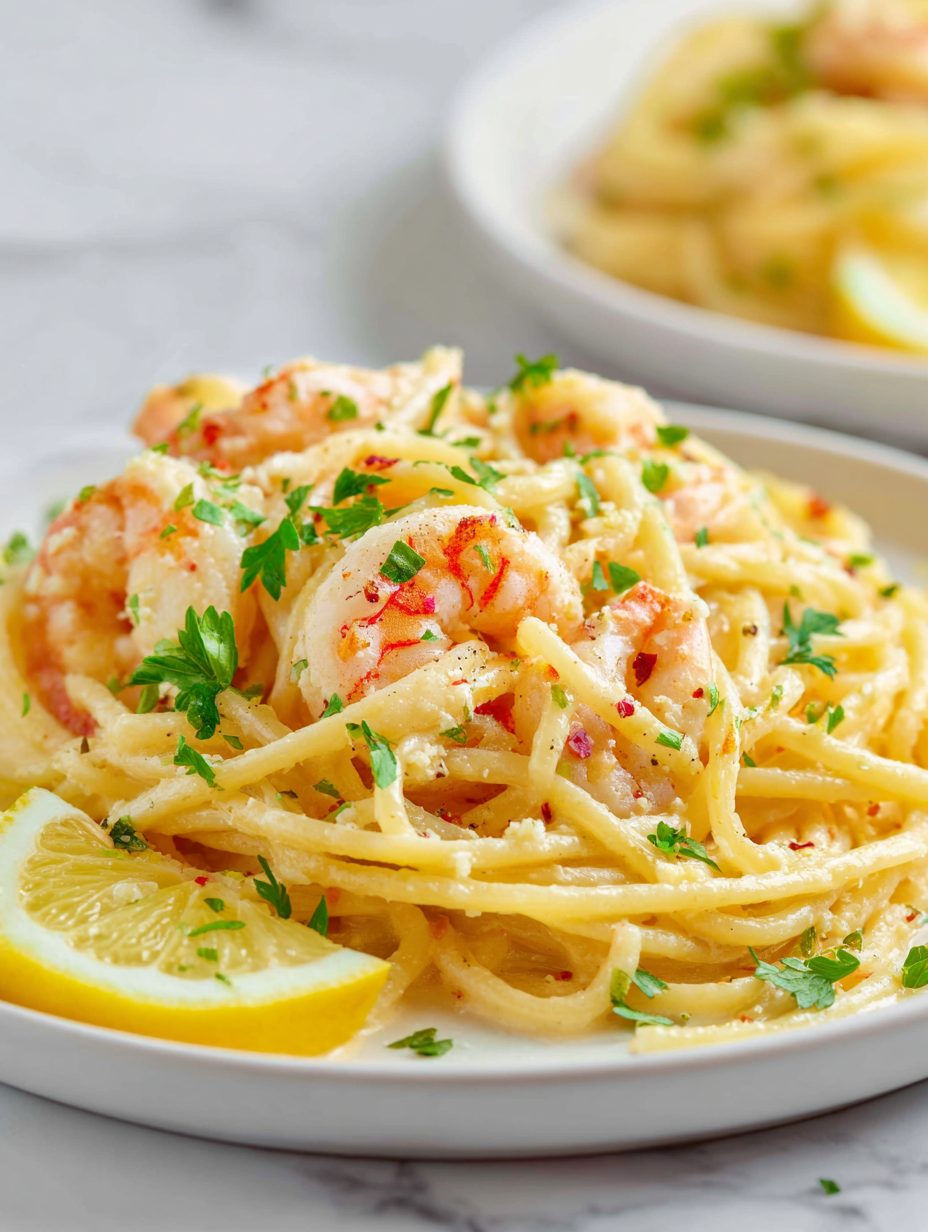
Creamy Shrimp Pasta
Ingredients
Equipment
Method
- Bring a large pot of salted water to a boil, then add the pasta and cook until just al dente, about 8 minutes. Drain and set aside.
- While the pasta cooks, peel and devein the shrimp, then pat them dry with paper towels. Season lightly with salt and pepper.
- Heat the large sauté pan over medium heat and add the olive oil. Once shimmering, add the shrimp in a single layer and cook for about 2-3 minutes per side, until they turn pink and opaque. Remove from the pan and set aside.
- In the same pan, add the butter and minced garlic. Sizzle for about 30 seconds until fragrant and golden, making sure not to burn the garlic.
- Pour in the milk and whisk constantly to prevent lumps. Bring the mixture to a gentle simmer over medium heat, stirring until it thickens slightly, about 3 minutes.
- Return the cooked shrimp to the pan, stirring to coat them in the sauce. Cook for another 1-2 minutes until heated through.
- Add the drained pasta to the pan, tossing gently to coat all strands evenly with the sauce. If it seems thick, add a splash of reserved pasta water to loosen it.
- Stir in the grated Parmesan cheese and lemon juice, tasting and adjusting with salt and pepper as needed. The sauce should be silky and cling to the pasta beautifully.
- Serve the creamy shrimp pasta immediately, garnished with extra Parmesan or fresh herbs if desired. Enjoy the rich, velvety texture and briny shrimp flavor in every bite!
Top tips for perfect sauce
- Bolded mini-head: Sizzle garlic until fragrant—avoid burning, for a sweet, nutty aroma that flavors the entire dish.
- Bolded mini-head: Use reserved pasta water—starchy and silky, it helps loosen the sauce without watering it down.
- Bolded mini-head: Cook shrimp just to pink—overcooking makes them rubbery; aim for a juicy, tender bite.
- Bolded mini-head: Stir sauce constantly during milk addition—prevents lumps and keeps it smooth and velvety.
- Bolded mini-head: Finish with lemon juice off the heat—brightens the sauce without cooking out the citrus flavor.
- Bolded mini-head: Toss pasta in the sauce off heat—helps sauce cling better and prevents separating.
- Bolded mini-head: Watch the sauce thickness—should coat the back of a spoon, not be runny or gloopy.
Common mistakes and how to fix them
- FORGOT to adjust heat; sauce can scorch—lower the heat if bubbling too vigorously.
- DUMPED too much salt in water—remember to taste test, and rinse pasta if overly salty.
- OVER-TORCHED shrimp—remove from heat immediately to avoid rubbery texture.
- MISSED to stir sauce constantly—lumps form; whisk vigorously to keep it silky.
Quick Fixes & Pantry Swaps
- When sauce is too thick, splash in hot pasta water and stir until silky.
- If shrimp turn rubbery, remove from heat sooner and add a splash of lemon juice.
- Splash extra milk if the sauce looks gloopy or isn’t coating well.
- Patch over-salted water by rinsing pasta briefly before adding to the sauce.
- Shield the garlic from burning by reducing heat once fragrant, about 30 seconds after adding.
Prep, store, and reheat tips
- Cook and drain the pasta ahead—store in an airtight container in the fridge for up to 2 days. It firms up slightly but reheats well with a splash of water.
- Peel and devein shrimp in advance. Keep covered in the fridge for up to 24 hours. Rinse briefly before cooking to refresh the texture.
- Prepare the white sauce separately and refrigerate in a sealed jar or container for up to 1 day. The sauce may thicken; stir in a little milk when reheating.
- Assemble the dish shortly before serving; reheat the sauce gently on low heat, stirring often, until steaming hot and silky again—about 3-5 minutes.
- Reheat leftovers in a skillet over low to medium heat, adding a splash of milk or pasta water to loosen the sauce and restore creaminess. Check for heat and smoothness before serving.
Common questions about shrimp white sauce pasta
1. Can I use frozen shrimp?
Use fresh or frozen shrimp, but fresh gives a better texture and flavor. Thaw frozen shrimp thoroughly before cooking.
2. Can I make this dairy-free?
Yes, swap milk with coconut milk or cashew cream for a dairy-free version, though the flavor will change slightly.
3. How al dente should the pasta be?
Cook the pasta just until al dente—about 8 minutes. Overcooking makes it mushy and less appealing to coat with sauce.
4. Can I use pre-grated cheese?
Use freshly grated Parmesan for the best flavor. Pre-grated cheese tends to be less flavorful and melts poorly.
5. What if the sauce gets too thick?
If the sauce gets too thick, add a splash of reserved pasta water or milk to loosen it up and keep it creamy.
6. How do I know when shrimp are done?
Make sure to cook shrimp until just pink and opaque—about 2-3 minutes per side—to avoid rubbery texture.
7. How do I prevent garlic from burning?
Use garlic that’s just golden and fragrant, about 30 seconds after adding, to avoid burning and bitterness.
8. How long can I store leftovers?
Store leftovers in an airtight container in the fridge for up to 2 days. Reheat gently with a splash of milk or water.
9. How do I reheat leftovers?
Reheat the dish in a skillet over low heat, stirring often, until hot and sauce is silky again—about 3-5 minutes.
10. How can I fix bland pasta?
Adjust seasoning by tasting before serving—add more lemon or Parmesan for extra brightness or saltiness.
This dish is a reminder that comfort can be simple and quick, especially when you’re craving something rich and satisfying. The smell of garlic and shrimp, combined with that silky white sauce, makes the kitchen feel warm and alive. It’s a kind of everyday indulgence that’s worth savoring, even on the busiest nights.
In the end, it’s about those small moments—stirring the sauce, watching the shrimp turn pink, tasting a tiny bit before serving. This recipe captures the joy of turning pantry staples into something memorable. No matter how often I make it, it still feels like a little celebration.